Innovation in the background, impact in the foreground – The ABB approach
23 April 2026
Modern business leaders are grappling with the same challenge: how to stay competitive while moving faster towards net zero, greater resilience, and smarter use of resources. Few companies sit closer to that crossroads than ABB – a group whose technologies power energy systems, factories, hospitals, ships, and data centres across the world. ABB now joins the SCC UK community, with a story offering both a rich industrial heritage and a clear-sighted view of the future.
More than meets the eye
At first glance, ABB can seem like a business that works f irmly “behind the scenes”. Yet without its technologies, much of modern life simply would not function.
“ABB is a global leader in electrification and automation, committed to enabling a more sustainable and resource efficient future,” says Malgorzata Moussa, Country Holding Officer UK & Ireland. “With 110,000 employees worldwide and more than 140 years of innovation, we operate through three core businesses: Electrification, delivering advanced energy distribution and management technologies; Motion, providing industry leading electric motors, drives, and digital powertrain solutions; and Automation, offering integrated control systems, software, and analytics for process, hybrid, and maritime industries.”
Those three pillars give ABB a distinctive vantage point. The group is not focused on a single sector; it sits across the systems that allow entire economies to function – and that now must be rebuilt for a lower carbon, digital era.
Future-proofing UK and Ireland industry through electrification, automation, and digitalisation
For Malgorzata, ‘future-proofing’ is more about engineering what comes next, rather than predicting it. “From my position, this means we’re at an inflection point where three fundamental capabilities – electrification, automation, and digitalisation – will define industrial competitiveness for the next generation.”
On electrification, she points to the UK’s net zero journey and the rapid build out of renewables. “We’re proud to be involved in eight UK offshore wind projects, including Dogger Bank, the world’s largest offshore wind farm. But generating renewable power is only part of the equation. Grid stability matters enormously, which is why projects like our synchronous condensers in Liverpool are so important – they help the grid handle the variability that comes with wind and solar.”
Automation, she argues, is just as critical. “I’ve observed how industries globally are discovering that automation delivers multiple benefits simultaneously. Take the steel sector, where transitioning to electric arc furnaces improves both cost efficiency and environmental performance. It’s not an either or proposition – productivity and sustainability can advance together. That’s the kind of transformation we see potential for across UK and Ireland manufacturing sector.”
Then comes digitalisation – the ‘connective tissue’ that allows electrification and automation to reach their full potential. Data, analytics, and digital tools, Malgorzata notes, enable organisations to “see their operations end to end, anticipate issues before they arise, and optimise performance in real time,” helping them move “from reactive to predictive approaches” and view sustainability as integral to competitiveness.
Investing in resilience at home
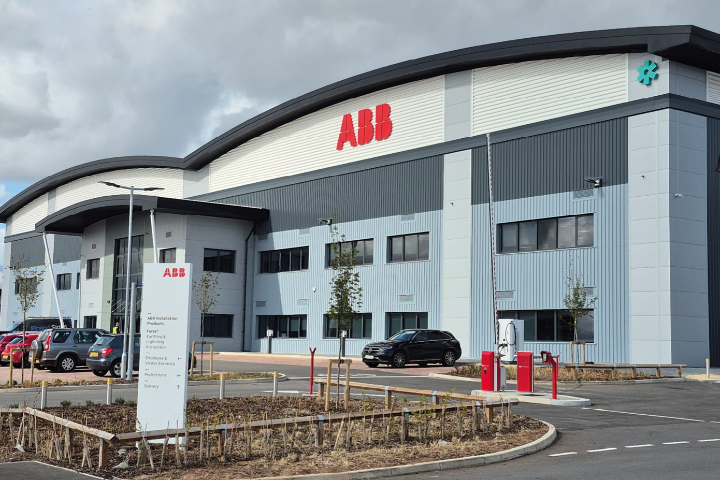
That philosophy is visible in ABB’s recent £33 million investment in its earthing and lightning protection facility in Nottingham. Severe weather and complex infrastructure are changing risk profiles, and Malgorzata is clear about the stakes.
“The frequency and intensity of severe weather events with lightning strikes are increasing. This investment means access to advanced protection solutions that safeguard their most critical assets; whether that’s a data centre supporting cloud services, a hospital’s medical equipment, renewable energy infrastructure, or telecommunications networks.”
The facility is also part of a broader shift in how ABB serves its markets. “The £33 million investment in our new Nottingham facility is part of ABB’s broader strategy to drive innovation and sustainability, expand manufacturing, and shorten supply chains to bring production and R&D closer to customers.”
For the UK, advanced manufacturing is far more than a technical upgrade. “I see advanced manufacturing as the enabler of UK industrial resilience and competitiveness,” Malgorzata says. “Crucially, it also helps anchor high value skills, innovation, and supply chains in the UK – turning manufacturing into a strategic asset rather than a cost base.”
From transactions to true partnership
ABB’s collaborations across the UK and Ireland reveal another important differentiator: a system level mindset. Whether supporting offshore wind in the harsh North Sea environment or acquiring UK based diagnostics specialist IPEC, the company is rethinking how industrial challenges are tackled.
IPEC’s technology “tracks critical electrical infrastructure around the clock, using AI and advanced analytics to predict failures that could result in multi-million-dollar losses, safety risks or extended outages for industries such as data centres, healthcare, utilities and manufacturing.” For Malgorzata, this is emblematic of a broader shift “from solving isolated technical problems to addressing challenges at system level – combining hardware, software, data, and operational insight into a single, resilient solution.”
“At ABB, we have a mindset that enables genuine partnership rather than transactional relationships – working alongside customers and collaborators over the long term to co-create solutions that are safer, more resilient, and fit for the future.”
Culture, leadership, and lessons for change
Behind the technology, Malgorzata sees people and culture as ABB’s true engine of creativity. “ABB has evolved from a traditional engineering company into a leader in digitalised industrial automation and electrification, and that transformation has been underpinned by a relentless focus on customer value,” she reflects. “Our most impactful solutions share common characteristics: increased energy efficiency, enhanced safety, and the intelligent integration of software with hardware.”
But what truly stands out is how she links innovation to values and inclusion. “ABB is a genuinely diverse and inclusive organisation, and that diversity of background, experience, and thought, is a powerful driver of innovation. When people feel included and empowered, they challenge assumptions, bring new perspectives, and collaborate more effectively.”
This people centred culture is not only felt internally but also externally recognised. ABB has been certified as a Top Employer by the Top Employers Institute for the sixth consecutive year, reflecting a sustained commitment to creating a workplace where values are lived, not just stated. The certification reinforces that ABB’s culture of trust, inclusion, development, and care is embedded in everyday leadership behaviours and ways of working.
“This is where our values come to life,” she adds. “Customer focus ensures innovation solves real problems. Care guides how we protect people, operations, and the environment. Curiosity drives us to continuously question and improve. And collaboration – across businesses, cultures, and partners – turns ideas into scalable solutions.”
For leaders navigating broader organisational change, ABB’s journey offers three clear lessons: treat sustainability as a driver of competitiveness, not a constraint; think in systems, not silos; and invest in cultures where curiosity, care, and collaboration are lived every day. As Malgorzata puts it, “our most creative solutions haven’t come from isolated breakthroughs, but from a culture where inclusion, curiosity, and collaboration are embedded in everyday decisions. That combination is a true enabler of innovation – and one of ABB’s greatest strengths.”