How innovation, authenticity, and sled dogs shape leadership at Alfa Laval UK
17 December 2025
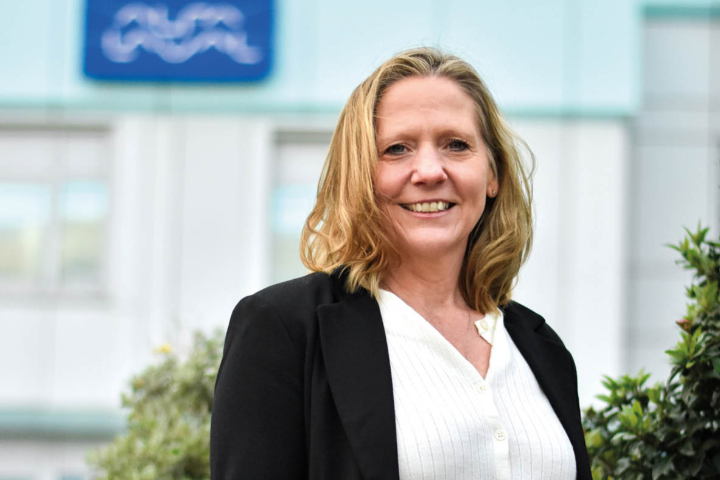
From the hum of the service centre to the innovation shaping tomorrow’s industries, Alfa Laval is a company defined by people and passion. At the centre of it all is Rachel Bridges, Managing Director for the UK and Ireland, whose leadership blends authenticity, curiosity, and a love for learning – qualities that ripple through every team and process she touches. And somewhere amid the precision, engineering, and innovation, sled dogs have found a place too.
Arriving in a Volvo, Rachel Bridges pulls up at the station to collect us. With an easy smile, she welcomes us to Camberley – where Alfa Laval is well rooted and now host around 150 workers.
A short drive later, we step into the company’s offices, greeted by two of her colleagues – Dave Jones, Service Centre Manager and Liam Rice, Separation Team Leader – who hand us steel-toed shoes, safety glasses, and crisp white vests stamped with the Alfa Laval logo. It is clear we are heading straight into the heart of the operation.
Inside the service centre, where around 30 colleagues work with remarkable precision, restoring and repairing equipment entrusted to them by Alfa Laval’s clients. There is a quiet pride in the air – one matched by Rachel’s own.
“I come down here at least every other week,” she notes. And it shows. As we move through the workshop, she greets people by name, pauses for quick conversations, shares a laugh, and listens intently while Dave and Liam talk us through the processes with genuine enthusiasm.
Back in Rachel’s offices for the interview itself, she says: “The engagement I see every day from colleagues, how they talk so passionately about the different machines – the passion is really here. It doesn't look like much externally – a decanter is a piece of metal with some spirals in it – yet the pride in what they do and the customers they work with is pretty incredible. We are a really proud company.”
Where does the passion come from? According to Rachel, it is the company’s rich heritage.
Alfa Laval’s origins trace back to a simple moment of everyday observation back in 1883. When Gustaf de Laval saw how time-consuming and inefficient it was for farmers to separate cream from milk, he set out to solve the problem with smart engineering rather than hard labour. His invention of the centrifugal separator not only transformed dairy production but laid the groundwork for a company built on practical innovation with real-world impact. That same spirit still defines Alfa Laval today: identifying challenges across industries and creating technologies that make processes cleaner, faster, and more sustainable.
“Hopefully Gustaf is still proud of us,” says Rachel.
Present in your everyday life – without noticing it
Alfa Laval develops technologies that heat, cool, separate, and transport liquids – essential processes that keep industries running smoothly. Their solutions help everything from food production to energy and marine operations become more efficient and more sustainable.
“I think what's interesting about Alfa Laval is that 95% of the population is a recipient of a process we've been involved in. They might not even know it or the company. However, they've probably used a product that had our product in its process – like if they’ve had milk, ice cream, or if they’ve turned their boiler on, there’s probably an Alfa Laval product involved. We are really prevalent in everyday life, yet without people knowing,” says Rachel.
Innovation and sustainability present in each step
At Alfa Laval, innovation touches everything they do. Rachel explains: “Robotics and automation are helping us assemble high-volume products like brazed heat exchangers more efficiently, but the real innovations are in the materials and processes themselves. We’re exploring new metals, using zero-carbon energy, and investing in technologies like cryogenics – opening doors to green hydrogen and future fuels. Advanced engineering isn’t just about machines; it’s about finding smarter, more sustainable ways to do our work.”
Sustainability, she adds, is more than a tagline. “Our phrase, ‘pioneering positive impact,’ reflects how we approach it. It’s about making our customers’ processes cleaner and more efficient. Even in traditional sectors like oil and gas, we can help reduce environmental impact. It’s not always flashy technology; it’s practical improvements that work for the people using our products, here in the UK and Ireland, and beyond.”
The focus on people remained central, especially when moving into AI. “Many tasks on the floor are still manual and heavy,” Rachel says. “AI and robotics can take on the risky parts, whether that’s lifting or measuring equipment, so our teams are safer. Technology is exciting, but its real value is in supporting people – keeping them safe, empowered, and able to focus on the work that matters.”
Passion drew Rachel into a world of engineering
Rachel’s journey into engineering began when she was 19, in need of a job, and walked into Cummins’ marine offices in Charleston, USA. “I was met by people who were genuinely passionate about the industry,” she recalls. “They would stop and show me the details of an engine, explain its functions and applications. It was infectious – I got hooked immediately.”
Starting as an admin assistant, she worked through roles in marketing, product development, and sales management, driven by curiosity and the energy of passionate colleagues. Alfa Laval, a former supplier to Cummins, came into the picture unexpectedly.
“Meeting the Alfa Laval marine team felt familiar, like sitting down with people you’ve known forever. Cummins was shifting focus away from marine, and the timing felt right. It felt like fate.” And now, she has been in her position as Managing Director for over one and a half years.
An American leading a Swedish company in the UK comes with its lessons though, Rachel laughs and explains: “I grew up in a very top-down, American style of management,” Rachel reflects. “Alfa Laval is very consensus-driven – very Swedish. I’ve had to learn patience, to pick where consensus matters, and to delegate more. I got it wrong at first, insisting on doing things my way. Listening, understanding how people communicate and make decisions, and adapting my approach has been a real learning journey.”
Leadership isn’t transactional
Rachel’s leadership philosophy has been shaped not by a single moment, but by countless small lessons along the way.
“I really love to learn from other people, to watch and listen,” she says. She’s had the privilege of working with leaders from all over – American, British, Spanish, Austrian – and she absorbs what resonates, weaving it into her own style.
One lesson stands out vividly. Early in her career, when she had her first direct report, she approached it transactionally: checking in on tasks, tracking progress, assigning activities. Until one day, her colleague asked, “Do you know what’s important to me? You don’t really talk to me.” Rachel laughs softly recalling it. “I thought I was being supportive. But she had never felt seen. That moment stayed with me. Leadership isn’t transactional – it’s about genuinely caring for the people you work with.”
It was a lesson we saw come to life just an hour earlier, walking through the service centre with her.
For Rachel, modesty and authenticity are at the heart of leadership. “You see so many leaders that never seem to show any type of weakness or uncertainty. And I’m not like that,” she says. “The more I open up, especially to my team, the more honest I can be, the more authentic I can be, the better we work.” She adds, “They don’t look at me like I have to have every answer. They know I don’t. They know I’m a flawed individual, as we all are. And I think that really helps to generate solutions. They know they have some accountability to come to the table with their own solutions.”
Rachel’s love for huskies became a strategic business success
One of the things that drives Rachel outside the office is racing with her two huskies, and it’s a passion that clearly informs how she leads. “The structure of a sled team is fascinating,” she says. “The musher leads from the back – not making all the decisions but guiding the team. The lead dogs at the front can see what’s ahead much more clearly, so they need to make choices, and the musher teaches them how to make the right ones.”
Every dog in the harness has a role, and if even one doesn’t pull its weight, the whole team can falter. “It can lead to disasters – the sled could tip; the team could go off course. But when you put a harness on a husky ready to work, they are thrilled, passionate, and eager. That’s how I want my teams to feel. Excited to get to work, confident in their role, and performing together.”
Earlier this year, Rachel introduced the sled dog as a symbol for the team. “We have a very ambitious target after a tough 2024. We needed something everyone could rally around – a common language. Giving each colleague a stuffed husky, together with a clear strategy, reminded everyone: we’re in this together, everybody has a role, and we want you to be happy working in the harness.”
It’s a simple, personal image, but one she returns to again and again. “I’m not the world’s best storyteller,” she admits, “but if I pick a theme I care about, I can weave a story. In the past it’s been rugby or football, but sled dogs are a favourite. It gives the team a shared image, a consistent message, and a way to keep talking the same language.”
The Chamber – real value for the whole company
Rachel sees real value in the Chamber. “The networking opportunities are invaluable – connecting with other Swedish companies in the UK and sharing experiences. When I first joined Alfa Laval, it helped to have a few trusted connections to navigate a new environment and exchange advice.”
She also appreciates the insights the Chamber provides. “Hearing both business and political perspectives helps us understand what’s realistic and where we might need to We are a really proud company. “ influence. It gives context to our ambitions and decisions.”
Rachel plays an active role in the network, coming to events and being a mentor in our mentorship programme. Now, she actively involves her team too. “I’ve started sending out invitations and encouraging participation. It’s been a great investment of time – for anyone coming from Sweden, or from outside, it’s a really helpful way to get oriented and connected.”
“I am so proud of my team”
As the interview draws to a close, Rachel, with a quiet pride in her eyes, adds one final remark: “I want to end with one thing; as I said previously, 2024 was tough and the targets for 2025 are high. I am so proud of my team because we're going to beat almost every single one of the targets that we set. We're having an incredible year, and I'm so happy and proud for the team.”
Walking out of Alfa Laval, each of us with a small stuffed husky – a playful reminder of the team spirit Rachel cherishes – it’s clear how her leadership and the passion on the floor and throughout Alfa Laval come together. “I am so proud of my team,” she says, and having seen the energy, skill, and dedication around every corner, it’s easy to understand why.