Growing up between two worlds – and building bridges between them
27 August 2026
For more than a century, The Swedish School in London has equipped pupils with the confidence and cultural knowledge to navigate two worlds fluently – combining the Swedish curriculum with being based in one of the greatest cities on Earth. Its academic track record opens doors to top universities in the UK, Sweden, and beyond. We sat down with new Head Anette Elving Ferm to discuss what makes the school so special, and the exciting future ahead.
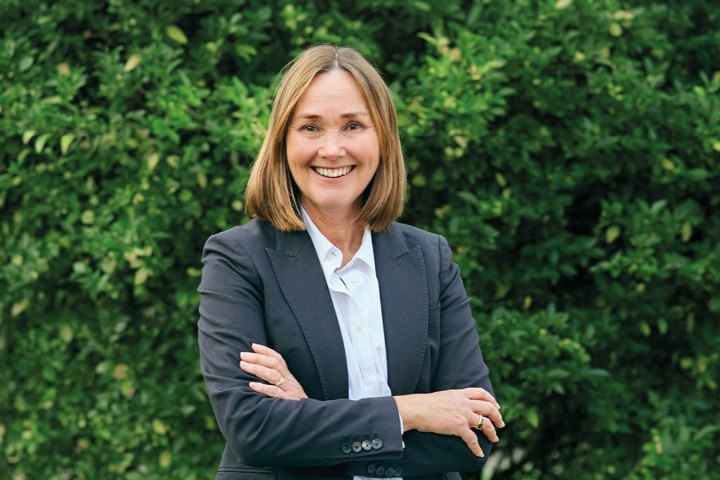
Anette has led the school since April last year and has been involved for 16 years in total – on the board, as the school’s Finance Manager, and later as a teacher and deputy head. That long view, combined with the development work carried out by the leadership team and board in recent years, enriches the way she talks about the school today.
A small school with a broad horizon
“We have two campuses, one in Barnes and one in Kew. In Barnes, we educate children from the age of two up to what in the UK would be GCSE age. And in Kew, we have a sixth form, with three programmes that all lead to university studies.”
The school follows the Swedish curriculum and is inspected by Skolinspektionen and approved by Skolverket, while also meeting Ofsted and Department for Education requirements. It is, essentially, a Swedish school fully present in a British setting – and an active link between Swedish companies and the UK market.
“Our pupils develop their Swedish language, they keep their cultural identity, but at the same time, they’re immersed in British culture and society, and they have access to all the opportunities that come with living in London.” London becomes part of the timetable: trips to the Houses of Parliament, the British Museum, the National Gallery, Westminster Abbey, and the Freud Museum, as well as visits to different places of worship in religious studies. From the age of eight or nine, pupils also go on yearly residential trips around the UK.
Recent years have also seen significant investment in the learning environment, enabled by close collaboration with both private donors and Swedish businesses. Through a targeted fundraising effort, the school has raised close to £250,000 in private and corporate donations – including support from Grythyttan, String, and Kinnarps – to strengthen its facilities and future. Last autumn, a new high-spec chemistry lab was inaugurated, and the school is now well on the way towards a long-planned renovation of the library.
Community at the centre
When asked what keeps families coming back, Anette starts with relationships. “We know our pupils so well, which means that we can support them in their learning, but also in developing as human beings, giving them a strong sense of belonging and cultural identity.” That sense of belonging stretches into weekends and holidays: Saturday football, parent organised outings, and friendships that continue long after pupils have moved on.
The school is also closely linked with the wider Swedish community in London – the Church, the Embassy, the Chamber and others. It is, as Anette describes it, “one of the pillars of the Swedish society in London.” This network, and the many Swedish and British companies connected to it, helps pupils build contacts that often follow them into higher education and working life on both sides of the North Sea.
Teaching that balances calm and ambition
Another point she returns to is the teaching itself. “Families often come to us from other British schools. And one piece of feedback we often receive is how much they value that we have a really broad curriculum, while still being academically ambitious, and that we have calm classrooms with confident teaching. We have 100% qualified teachers, which is unusual in both British and Swedish schools.”
Parents, she says, frequently comment on a real sense of purpose in the learning environment. “This enables their children to thrive academically, while also being seen and known as individuals, which is extremely important.”
This approach also appeals to British and mixed nationality families, with around 50% of these permanently residing in London. Some are drawn to the chance for their children to fully develop their Swedish alongside strong English, including the option of an IGCSE in English in Year 9. Others decide that the high stakes route through entrance tests and early exams is not for them. “In both cases, parents appreciate that our school keeps the options open, for further studies at British as well as Swedish universities – and increasingly, beyond.”
Over time, this has helped establish the school as a top performer academically, with pupils progressing to leading universities in the UK, Sweden and around the world. Many also go on to start their own ventures or work in innovative companies, building on the strong entrepreneurial mindset that the school nurtures – something previously highlighted in the campaign The World is Our Oyster. One former pupil, Lucas Otterling, was recently recognised by Forbes, a small but telling example of the paths that can start in Barnes and Kew.
Fairness as everyday practice
Culture, though, is not only about results. “It’s less hierarchical than many British schools are,” Anette says. “We don’t do detentions. If we have a disciplinary issue, we will always listen to everyone involved. That’s not just something in our policy, it’s what we actually do.” Over time, she argues, “this fairness and explaining why we have the rules we have, builds character and a genuine sense of right and wrong.”
After many years working inside the school, Anette struggles to pick a single favourite story. What stays with her are the everyday wins: a child who finally cracks reading, someone who scores full marks in a national maths test, or a student who might not have passed an entrance exam elsewhere later receiving an offer from a university most people only dream of.
For her, these moments are linked. “I know that we really matter,” she says. “We allow a path that doesn’t have to be straight. It leads to the same end, but it can be a bit more flexible.”
Open minds, broad horizons
Asked to sum up the spirit of the school, Anette chooses four words: “open minds, broad horizons”. “We’ve chosen this motto together – with pupils, staff, alumni. I think it summarises how we enable our pupils and students to see a world of opportunities, and to be really open to exploring them all, wherever in the world they choose to study and work.”