Craft, code and Candy Crush: King's Todd Green on keeping a franchise fresh
06 August 2026
King is one of Sweden's great digital success stories – a place where creativity and technical skill come together. As the company behind Candy Crush Saga, it has turned that combination into a global business, building games that are as much technology as entertainment, and as carefully engineered as they are playful.
When most people hear the word 'gamer', a particular image still tends to come to mind; teenagers, darkened rooms, headsets. It is an image that has proved stubbornly persistent – and, according to Todd Green, President of King, almost entirely wrong.
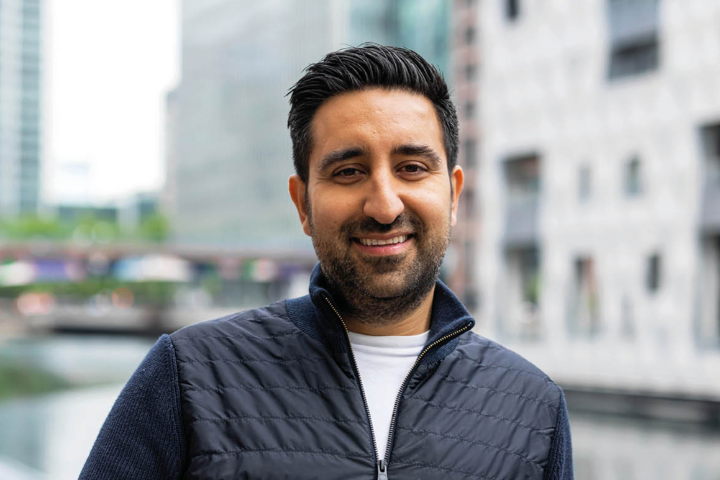
For just over a year, Todd has held the keys to what colleagues at King fondly call 'The Kingdom' – famous for one of the most downloaded mobile game franchises in history: Candy Crush. In that time, he has seen both what makes the company genuinely exceptional and why the wider world still struggles to understand what the games industry actually is. The gap between perception and reality, he argues, is not a minor misunderstanding. It shapes who applies for jobs, which investors pay attention, and which policymakers engage.
Who actually plays games?
Start with the numbers. More than 300 million people across Europe played mobile games in 2025. The average player age is 31, and three quarters of Europe's video game players are adults – a mainstream entertainment medium that has quietly outgrown the stereotypes attached to it.
"Mobile games have broadened access to gaming and have become mainstream today," Todd says. "We wanted to help tell a clearer story about the reach, diversity, and cultural relevance of mobile games today, and to challenge some of the outdated assumptions that still exist around who plays mobile games." That is the logic behind King's “Mobile Matters” report, which maps the economic and cultural impact of mobile games across Europe.
The point is not just who plays. It is what kind of product mobile games actually are. "Mobile games can look simple on the surface," Todd explains. "That is part of the craft. But making a game that is easy to understand, satisfying in a few minutes, and still interesting after months or years is very hard. There is a huge amount of thought behind that experience." Mobile has become the dominant format in global gaming – accounting for 55% of global games revenue – yet the perception of it as somehow lesser than console or PC gaming lingers on. For business leaders who still dismiss mobile as trivial, that is a serious blind spot.
Why Sweden keeps producing world-class digital companies
King still has deep roots in Sweden, with offices across Stockholm and Malmö alongside London, Barcelona, and Berlin. It sits in a remarkable lineage – alongside Spotify, Klarna, Mojang (Minecraft), and Dice (Battlefield) – of Swedish digital businesses that have scaled to global significance from a relatively small home market.
What explains it? Todd points to two things above all: focus and the ability to keep improving. "King has always been very clear about the kind of entertainment that we want to create; games with mass appeal that are easy to jump into but have real depth, progression and craft behind them." That clarity of purpose, held consistently over more than two decades, has proved more durable than chasing trends.
Long-term success, Todd argues, increasingly depends on retention and engagement – building enduring relationships with players, not simply growing install bases. That will sound familiar to anyone working with subscriptions, financial products, or professional services. The game is the delivery mechanism. The real product is the ongoing relationship and the trust that comes with it.
"Both countries share that mix of creativity and technical skill," Todd says of Sweden and the UK. "Games sit right at that intersection. They are entertainment, but they are also technology. They are creative products, but they are also global digital businesses." It is a description that fits many Swedish–British success stories, from music and media to fintech.
Innovation at King – and what AI actually changes
On AI, Todd's perspective is grounded. "I am very excited about AI, where and when it's used in the right way." At King, AI and machine learning help teams test faster, refine difficulty, improve quality at scale, and reduce repetitive work – freeing people to focus on the creative and strategic decisions that actually require human judgement.
That framing matters. The value of AI at King is not that it replaces creativity; it is that it protects time for creativity. For organisations wrestling with how to use AI in practice, that is a clear and practical way to think about it.
Beyond AI, King continues to extend its brands – testing new formats, building partnerships such as the Candy Crush tie-up with the Intuit Dome, and launching new experiences like Candy Crush Solitaire. "We are always evolving our live games to make them more engaging, more entertaining and more relevant to the people who play them," Todd says. For a franchise that launched over a decade ago, that constant reinvention is what keeps it alive.
Building the industry you want to see
King's approach to talent is as deliberate as its approach to product. In practice, that means investing in inclusive hiring, leadership development, and pathways into the industry. In Sweden, King has partnered with the Swedish Games Industry on a scholarship programme for women and non-binary people entering game development – combining education, mentoring, masterclasses, and access to industry networks. It also works with Junior Achievement Europe (Ung Företagsamhet) to help more young people see a future for themselves in tech and gaming.
Todd is clear about why this is more than a values statement. "Around 200 million people around the world play King's games every month. That audience is broad, global and diverse. So, the teams building those games need to bring their different perspectives, backgrounds, and life experiences into the work." If your players are everyone, your teams have to be representative of that.
His message to young people considering the industry is simple. "Don't rule yourself out just because you don't see yourself in the old stereotype of what a gamer is. The industry needs all kinds of people: artists, engineers, designers, writers, producers, data specialists, marketers, lawyers, community teams, and many others." The same lesson applies far beyond gaming. Any sector that defines talent too narrowly will miss out on the people it needs most.
What leaders can take from King
Todd's first year as President of King has been, by his own account, a lesson in balance. "The role is about protecting what makes King special, while making sure we can keep evolving," he says. That tension – between continuity and change, between identity and adaptation – is the central challenge of running any organisation that has built something worth protecting.
King's longevity is built on a set of deliberate choices: staying focused, investing in culture, listening closely to the people who use your product, and never mistaking initial success for long-term relevance. "The responsibility we have to keep building for the long term" is how Todd frames it. Building for the long-term means resisting short-term pressure, investing in people before it becomes urgent, and caring about experience as much as acquisition.
For leaders across the Swedish–British business community – whether in tech, financial services, creative industries, or anything in between – that is a useful playbook. The product and the platform may change, and the audience will keep growing and diversifying, but the principles that sustain an organisation through that turn out to be remarkably consistent.
Read King's Mobile Matters Report here