A new SCC UK Patron's view of the industry sector's autonomous future
25 November 2026
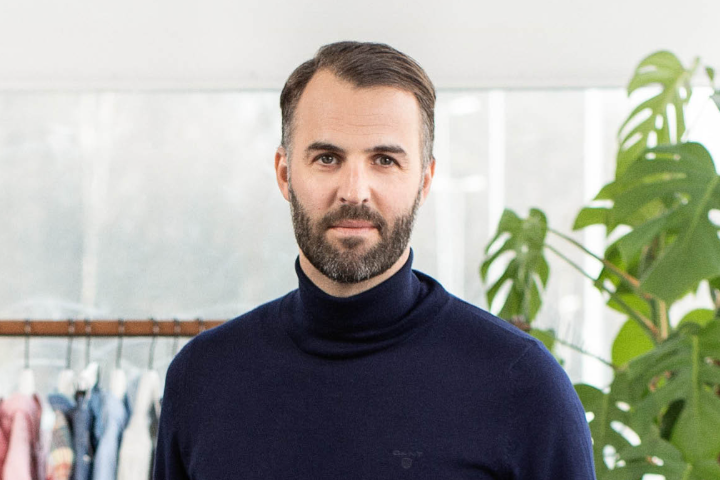
Across boardrooms right now, one opportunity is rising to the top of the agenda, even if few name it directly. Not whether AI will change things – that debate is settled – but whether the data underneath it is good enough to trust. It is a conversation new SCC UK Patron Hexagon, and its Chief Strategy Officer Andreas Wenzel, are at the very centre of.
As the global leader in precision measurement, positioning, and autonomous solutions, Hexagon has spent 25 years helping some of the world's most vital industries operate with greater accuracy, precision, and confidence. Now, with AI reshaping what those industries expect, Andreas has a clear view of where things are heading – and what organisations need to get right first.
What 'true autonomy' actually means
Hexagon's mission is to help customers achieve what they call 'true autonomy' – a phrase that can drift into abstraction, but for Andreas, it’s grounded in something concrete. "Truly autonomous systems are capable of sensing, making decisions, taking action, and adapting to changing conditions with limited human intervention. To do that, they have to be able to measure their environment accurately and precisely, and that is where Hexagon is best placed to help."
The distinction between automation and autonomy matters. Automation works well in controlled environments – a robot arm performing the same task or a machine cutting to specification. The problem is what happens next. "If a component is not in exactly the right place at the right time, the arm cannot find it," he explains. "As a cutting tool gradually loses its sharpness, the output drifts out of tolerance. In both cases, a person has to notice it first, then step in." Autonomy closes that gap: the system knows the part has moved and compensates in real time.
That foundation – trusted data from trusted measurement – is not incidental to the AI story. It is the AI story. "We capture, validate and structure high-quality sensor and measurement data first, then use AI to turn it into real outcomes," Andreas says. "In industries where errors affect safety, quality, cost, and performance, that's absolutely vital."
Built on a Swedish tradition of precision
Hexagon's heritage runs deeper than most realise, with unusually strong links to its Swedish home. Among many acquisitions, the company owns the continuation of C.E. Johansson, founded by the Swedish engineer who invented precision gauging blocks in the 1890s – an invention that remains the reference standard against which precision measurement technology is calibrated to this day.
That lineage shapes how Hexagon approaches everything it builds. "Above all, we prefer long-term value over short-term optimisation, with innovation expected to be durable, not just trend-driven," Andreas explains. The same orientation shows up in its sustainability work, with the company ranked 120th on TIME magazine's Most Sustainable Companies list for 2026. Headquartered in Stockholm and listed on Nasdaq Stockholm, Hexagon's Swedish identity is very much at the heart of the operations.
Where autonomy is already at work
Autonomy is no longer theoretical territory. Hexagon's AEON humanoid robot is already being piloted by BMW Group at its Leipzig plant, exploring how physical AI can support high-voltage battery assembly and component manufacturing in a real production environment.
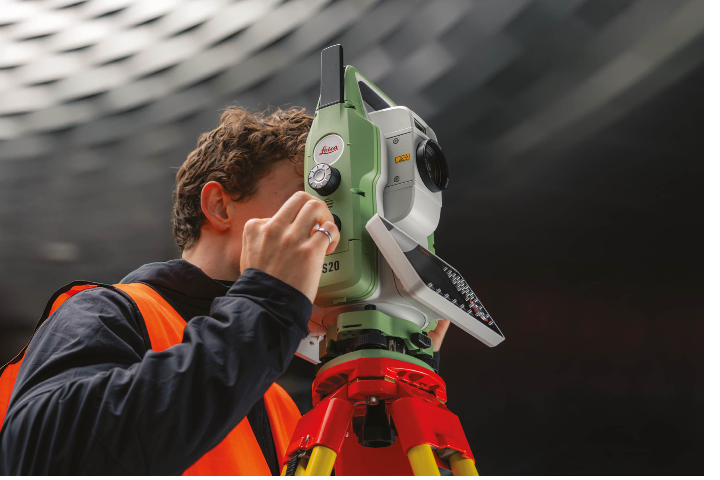
Elsewhere, survey company Coenradie has used Hexagon's Leica equipment with AI classification and mobile scanning to transform the 3D modelling of vast urban environments – cutting processing time by 70% and shifting workflows from the field to the office.
The common thread, Andreas notes, is trust. "As AI moves further into the physical world, the challenge now relates to how reliably and predictably it behaves. That means building in guardrails, human oversight, and trusted, high-fidelity data from the outset, not retrofitting them later."
The 'silver collar' era
For Hexagon, autonomy is not about reducing headcount; instead, it is about changing what people are asked to do. "We believe in keeping humans in the loop, because judgement, accountability, and context are human strengths," he says. Labour shortages and new sustainability targets are real pressures on the industries Hexagon serves, and autonomous systems help by taking on repetitive monitoring and correction work, freeing skilled people for the decisions that need them.
Andreas calls it the 'silver collar' era: "humans and intelligent systems working side by side, not as operator and tool, but as coordinated teammates." People become more important as systems become more autonomous – not less. "The real work ahead is building stronger human-AI collaboration so people can oversee intelligent systems with understanding, not just supervise from a distance."
Joining the SCC UK community
It is this outlook that Hexagon now brings to the Chamber, and we’re delighted to welcome Andreas and the whole Hexagon as a Patron. "Joining at Patron level reflects the importance we place on our Swedish roots, and how that forms part of our plans for continued international growth," Andreas notes.
For Hexagon, the membership is a platform for contributing to the conversations shaping the industries it serves. Andreas is equally focused on what the company can give back.
"We're happy to share what we've learned as a company that's scaled internationally, supporting members where we can, and contributing our perspective to policy conversations that affect the industries we serve." That mix of visibility, access, and two-way contribution makes Patron membership a natural step – and a welcome one, from a Chamber built by business, for business.
Why trust is the real foundation for AI
Step back from precision measurement and manufacturing, and Hexagon’s story comes down to a simple point: AI is only as useful as the foundations beneath it. “Simply put, it's trusted measurement systems and trusted data,” Andreas says. “As AI systems become more advanced, the quality and reliability of the data underneath them matter more.”
But trust is not just technical. It also depends on people, culture and governance. “Time and again, the companies that invest in cultural programmes, as well as in training and development, are the ones that progress in digital transformation faster and more effectively.”
That is what separates companies testing AI from those getting real value from it. “The organisations that build both of those habits now, investing in their people and their data together, will be the ones ready to trust AI with more.”